What Real Empowerment Looks Like in NDIS Support
Independence gets talked about a lot in the disability sector.
Sometimes it sounds like pressure. Sometimes it sounds like doing everything alone. Sometimes it sounds unrealistic.
But real independence is simpler than that.
It’s choosing what time you wake up. It’s deciding what to eat. It’s saying yes. It’s saying no.
Here in DATNM, we believe that empowerment begins with everyday decisions, because that is where confidence grows, and where dignity lives.
Independence is not isolation. It is control over your own life.
Choice Is Not Small
Daily choices shape identity.
Many people receiving NDIS support in Western Australia have experienced moments where routines were decided for them. Systems move quickly. Schedules get tight. Good intentions take over.
Over time, something subtle happens. Decision-making shrinks. But DATNM works differently.
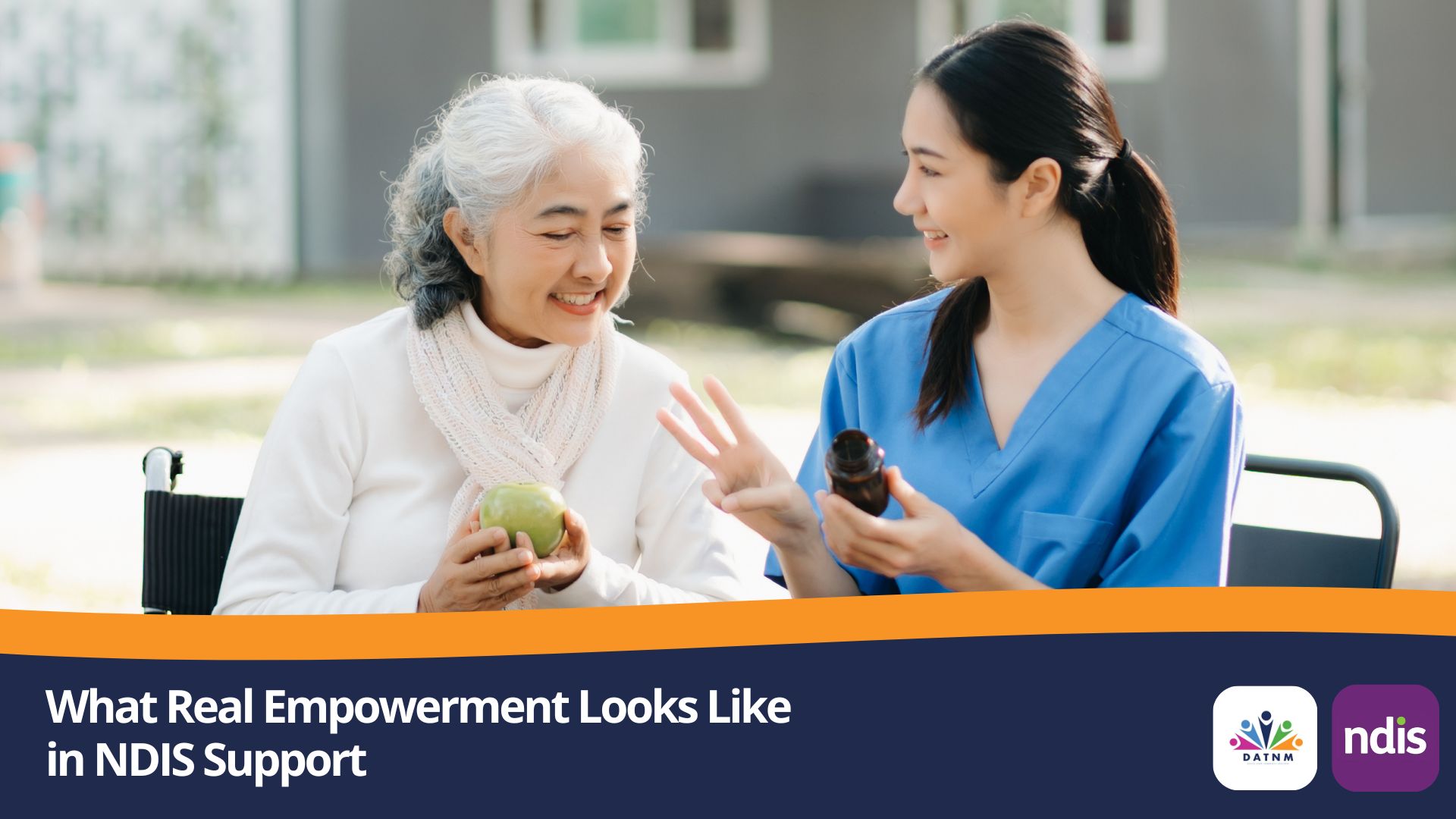
Support workers create space. Space to ask. Space to listen.
“What would you prefer today?”
“How would you like this done?”
“Does this feel right for you?”
Those questions matter, because choosing your own breakfast might look small from the outside. From the inside, it rebuilds ownership. Choosing your own support schedule restores control. Choosing when to step outside restores confidence.
Empowerment grows through repetition of choice.
Support Should Build, Not Replace
There is a difference between doing something for someone and doing something with someone.
The first creates dependency. And the second builds strength.
DATNM support workers focus on partnership. Skills are practiced together. Progress is encouraged without rushing. And growth feels safe.
A participant learning to prepare a simple meal gains more than cooking ability. They gain belief.
A participant navigating public transport with guidance gains more than mobility. They gain independence in the community.
Independence Looks Different for Everyone
No two participants define independence the same way.
For some, independence means managing personal care more confidently.
For others, it means directing their own clinical team.
For others still, it means reconnecting socially or pursuing study or work.
Every goal carries weight.
DATNM aligns support with individual NDIS plans and personal aspirations. Care plans are not templates. They are conversations. They evolve. They adjust. They respect the person behind the paperwork.
Dignity lives in that flexibility.
Families Feel the Shift Too
Empowerment changes more than the participant’s experience.
When individuals begin directing their own routines, tension softens. Conversations become lighter. Roles return to what they were meant to be — parent, sibling, partner — not full-time coordinator.
Support becomes a partnership rather than a strain.
Reassurance grows when families see confidence returning.
Confidence Grows in Everyday Moments
Independence is a series of steady steps.
Waking up with purpose. Attending a local café. Trying something new without fear. Making decisions without hesitation.
These moments seem ordinary, but they are powerful.
DATNM exists to protect those moments. Every support worker understands that their role is not to take over. Their role is to stand beside.
True empowerment requires believing that every individual deserves control over their own life.
A Solution for Independence in Western Australia
Disability support should never feel clinical or transactional. It should feel human.
DATNM delivers person-centred NDIS support with one clear purpose — to strengthen independence through choice. Because we believe that compassion anchors every interaction. Professionalism guides every decision. Respect shapes every care plan.
Independence does not mean doing everything alone.
It means knowing your voice leads the way.
That is empowerment.
That is dignity.
That is what makes everyday life meaningful.
There are no comments