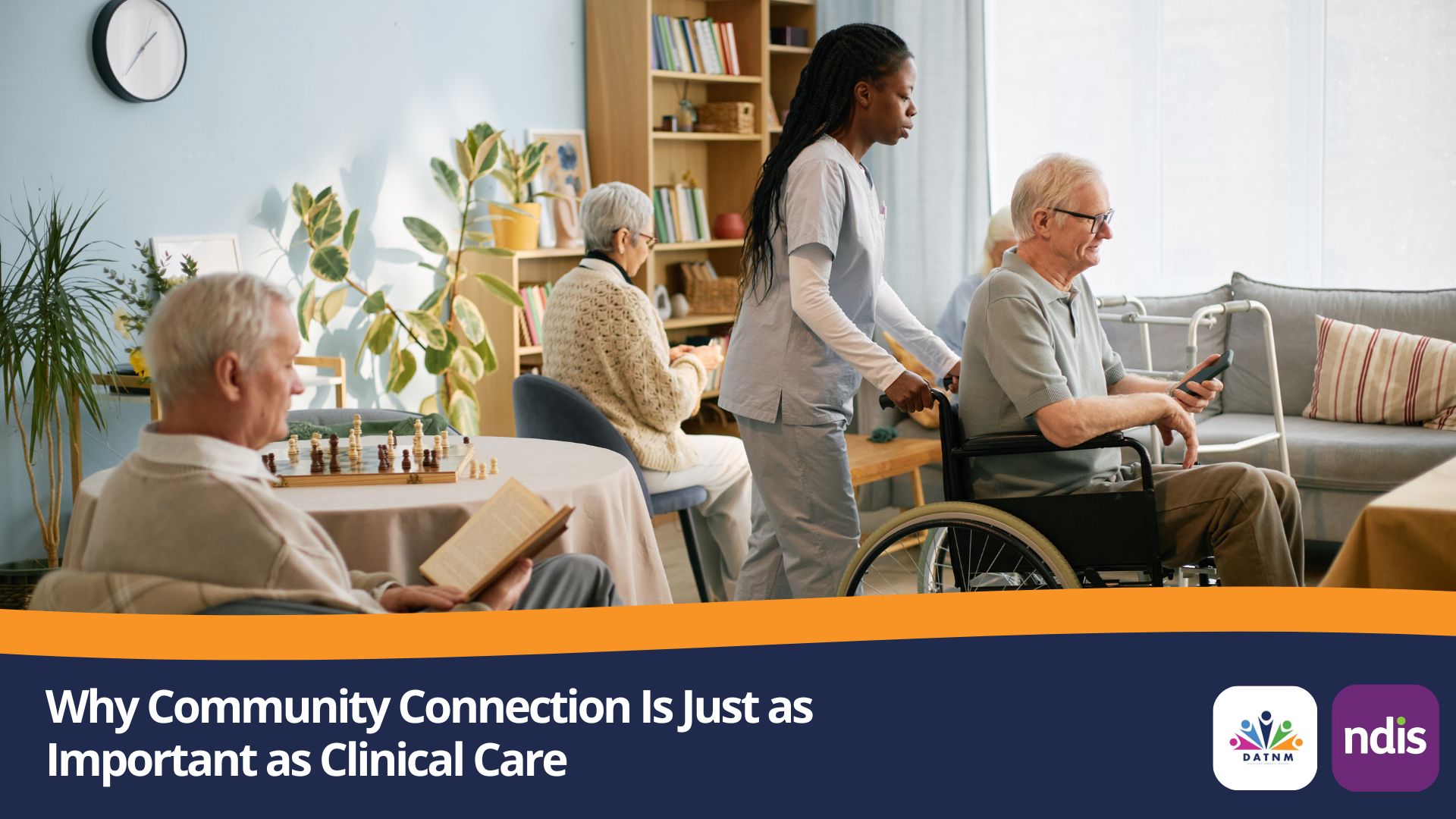
Why Community Connection Is Just as Important as Clinical Care
When was the last time someone greeted you by name?
That small moment matters more than most people realise.
In disability support, conversations often focus on physical health. Medication schedules. Mobility goals. Clinical reviews. Risk assessments. All important. All necessary.
Yet something often gets overlooked.
Belonging.
Social isolation remains one of the most significant challenges faced by people living with disability across Western Australia. Isolation does not always look dramatic. Sometimes it looks like days without conversation. Sometimes it looks like being present in a space but unseen.
Here in DATNM, we treat belonging as a vital sign. Because when connection weakens, wellbeing follows as well.
Independence feels different when it is shared.
Being Seen Changes Everything
Community access is often described as an outing. A scheduled activity. A line item in an NDIS plan.
That language misses the point.
True community connection is about being recognised. It is about becoming part of something familiar.
The barista who remembers your order.
The librarian who asks about your week.
The neighbour who waves when you pass.
These interactions rebuild identity.
DATNM support workers focus on consistency. Familiar local spaces become safe spaces. Participants move from visitor to regular. From observer to contributor. From background to belonging.
Confidence grows when people feel valued in their own neighbourhood.
Perth is not just a city, but iis a network of communities waiting to include you.
Connection Strengthens Mental and Physical Health
Belonging impacts more than mood.
Research consistently links social connection to improved mental wellbeing, reduced stress levels, stronger immune function, and increased motivation. Participants who feel socially connected often engage more actively with their NDIS support plans.
DATNM recognises that holistic disability support must address both clinical and social health. Nursing care and community engagement work together. One protects safety, while the other protects spirit.
Shared Experiences Build Resilience
Trust grows through shared moments.
Attending a local sporting match. Joining an art group. Visiting a weekend market. Sitting at a café with genuine conversation. These experiences build more than memories. They build resilience.
Support workers at DATNM provide structure, encouragement, and reliable transport. They step back when confidence rises. They step in when reassurance is needed.
The goal is never dependency. The goal is participation.
Participants begin suggesting new activities. They reconnect with hobbies. They initiate conversations. Small risks feel safer.
Belonging replaces hesitation with courage.
Families Notice the Difference
Connection creates visible change.
Families often describe a shift when social belonging returns. Smiles appear more easily. Sleep improves. Engagement increases. Conversations feel lighter.
A connected life reduces emotional strain on households. Support becomes collaborative rather than heavy.
Community involvement also builds natural support networks beyond formal care. Familiar faces. Friendly spaces. Predictable routines.
Independence feels stronger when supported by more than one person.
Independence Includes Community
Independence means having the confidence to step into the world and know you belong there.
DATNM delivers community access support across Western Australia with purpose. Every outing is intentional. Every interaction is meaningful. Every step outside is an opportunity to strengthen identity.
We believe healthcare extends beyond clinical charts.
We believe social health is a measure of thriving.
We believe every person deserves to feel recognised, respected, and included in their community.
Belongingness is a foundation. And when belonging becomes part of everyday life, independence feels fuller. Stronger. More alive.
There are no comments